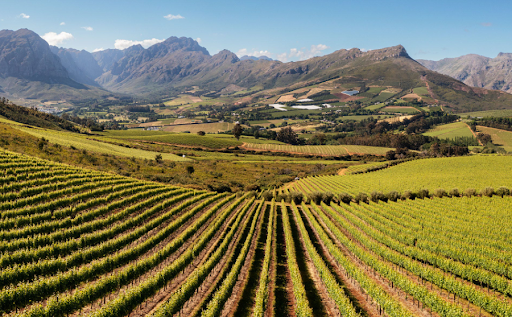
There are wine regions that produce exceptional wine and offer little else, and there are regions where the landscape itself makes such an impression that the wine would need to actively disappoint to leave a visitor underwhelmed. Stellenbosch vineyards sit in the second category without any qualification — the Helderberg and Simonsberg mountains shifting colour across the day, vineyard blocks rolling across valley floors and lower slopes, Cape Dutch homesteads anchoring estates that have been farming the same land across generations. Visitors who arrive expecting a functional tasting experience and leave having spent three hours at a single estate talking to a winemaker about soil and mountain influence are not surprised by Stellenbosch — they are simply discovering what the region has always been for people who know it well.
Cabernet That Is Distinctly Itself
The Cabernet Sauvignon conversation in Stellenbosch is one of the more interesting ones in the global wine world precisely because the best examples are not trying to be Bordeaux or Napa—they are something that has emerged from the specific interaction between granite and sandstone soils, the cooling maritime influence of False Bay, and a Mediterranean climate that delivers warmth and light in a particular way that neither France nor California replicates. Tasting a Helderberg Cabernet in the vineyard where it was grown produces an understanding of place that no tasting note manages to convey, partly because the landscape is visible from the glass and partly because the winemakers who make these wines tend to talk about them with an honesty about what the site does rather than what the winemaking achieves.
Where the Blend Tradition Has Gone
The Cape blend conversation has moved in genuinely interesting directions over the past decade and Stellenbosch is at the centre of it — not because producers are following a template but because several of the region’s most thoughtful winemakers have been asking honest questions about which varieties actually thrive here and why. The answer has expanded considerably beyond the Bordeaux framework that historically defined Cape red blends, with Rhône varieties and Mediterranean grapes increasingly appearing in wines that carry both the structure of the region’s best sites and a freshness that the traditional framework occasionally struggled to maintain in warmer vintages. Stellenbosch vineyards producing these more exploratory blends offer something that the region’s more traditional estates do not — a window into where serious South African winemaking is currently heading rather than where it has come from.
Estate Visits That Actually Teach You Something
The cellar tours at Stellenbosch’s better estates are not the kind that move visitors through a sequence of tanks whilst a guide recites production information at a pace that leaves no room for questions. They tend to be conversations — about why specific blocks were planted with specific varieties, about what the winemaker learned from a difficult vintage that changed how they farm, about the ongoing tension between international style and something that is more honestly expressive of the Cape. This quality of engagement is not universal across the region, but it is available in a concentration that is unusual in the global context of wine tourism and that makes visits to individual estates here disproportionately memorable compared with more choreographed tasting experiences elsewhere.
Chenin Blanc and the Old Vine Question
The old vine Chenin Blanc story in Stellenbosch is genuinely compelling once someone explains what survived the era of bulk production and why it matters that some of those sites are still being farmed. Vines that were planted when nobody thought Chenin Blanc was worth taking seriously have turned out to produce fruit of uncommon intensity and character — the combination of age, specific site conditions, and low yields creating a raw material that younger plantings simply cannot replicate regardless of how carefully they are managed. Stellenbosch vineyards working with this older material are producing Chenins that sit comfortably alongside serious Loire examples without being derivative of them, and tasting these wines with the winemaker who made them — in the shade of the estate’s oak trees with the vines visible behind them — is a particular kind of wine experience that stays with people.
Food Culture That Has Grown to Match the Wine
The estate restaurant culture in Stellenbosch has moved well beyond what it was even a decade ago, with a number of properties now operating kitchens that take local produce as seriously as their cellar teams take fruit from the vineyard. Eating food grown within a few kilometres of the table, drinking wines made from the vines visible through the restaurant window, in a building that has been part of the landscape for a century or more — this is a specific and genuinely rare kind of experience that the better Stellenbosch estates have developed with real sophistication rather than treating the restaurant as a secondary commercial offering attached to the tasting room.
Getting There Without Losing the Day
The proximity of Stellenbosch to Cape Town creates a quality of access that most serious wine regions in the world cannot offer — close enough to visit as a day trip without the logistics of significant travel, far enough removed from the city to feel like a genuine immersion in a wine landscape. This means visitors to Cape Town can return to the region across multiple days rather than attempting a compressed overview of everything in a single afternoon, which is how the region actually rewards engagement — through return visits to the same estate in different vintages, through conversations that develop over several encounters with the same winemaker, and through the kind of accumulated understanding of a place that a single visit can only hint at.
Conclusion
Stellenbosch vineyards offer a wine experience that combines serious, expressive winemaking with a landscape and a depth of hospitality culture that most established wine regions have not managed to develop simultaneously and to the same standard. The combination of genuine winemaking ambition, extraordinary natural setting, historically significant estates, and an increasingly sophisticated food culture makes Stellenbosch one of the most complete wine destinations in the world rather than simply South Africa’s most important wine address.