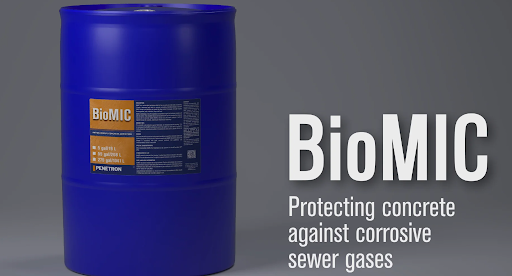
When bacteria start growing on concrete surface in wet places, the material can be damaged badly. Antimicrobial concrete admixture is one kind of additive which is mixed into concrete during batching, and it reduces the growth of harmful bacteria on the surface and also inside. Mostly it is used for slowing microbial corrosion in sewers, wastewater plants and other damp structures having gases. Protection comes from the concrete itself, so full thickness of the material gets it, not just the outer face.
Strength of concrete is high, but it is alkaline by nature, and acid is not friendly to it. In sewer pipes and treatment plants, the wastewater has some bacteria which release hydrogen sulfide gas. That gas travels up in the moist air over the water and then settles down on the concrete wall.
Then another group of bacteria, living on that wall, converts the gas to sulfuric acid. Name of this process is microbially induced concrete corrosion. Cement paste is eaten by the acid, so surface turns soft and begins to crumble. As time passes, pipe walls become thinner, steel bars inside come out in open, and repair or replacement is needed much before the planned life.
How Does the Additive Work Inside Concrete?
Inside the additive, there are active ingredients which disturb bacteria once they reach the concrete. Every microbe in the surrounding is not killed by it. Only the bacteria responsible for acid making and biofilm formation on the surface are its target.
Simple steps are like this:
- Bacteria arrive and settle on the wet concrete wall
- Active agents in the mix interfere with their growth and activity
- Less acid is produced, so cement paste stays safe
Because these agents are distributed evenly in whole mix, they remain present even if top surface gets worn slightly after many years.
Where Is This Type of Protection Used?
Benefit can be taken by any concrete which stays damp and comes in contact with sewer gas. Common places are:
- Sewer pipes and manholes
- Wet wells and pumping stations
- Wastewater treatment tanks and channels
- Stormwater and drainage structures
- Precast concrete units made for harsh environments
Same idea is also being studied for food processing floors and other hygiene sensitive areas, however sewer protection stays the main application.
Does It Change Concrete Strength or Workability?
Additive of good design is prepared to work along with the normal performance of concrete. During product testing and trial mixes, strength, setting time and workability are checked. Even then, good mix design, low permeability, correct curing and proper compaction are still needed in concrete. These basic things are supported by the additive, but their place cannot be taken by it.
How Is It Different from Coatings and Liners?
After the concrete is cast already, coatings and liners are applied on it. Only a surface barrier is made by them. If this barrier gets cracks, peels off, or is damaged in maintenance work, then acid and bacteria are able to reach the concrete under it.
Admixture, on the other side, goes in before casting, so later there is no need of separate application. There is no layer to peel off, and protection remains wherever the concrete exists. In some projects, both methods are used together for extra safety, and this depends on how severe the exposure is.
How Long Does the Protection Last?
Service life is depending on exposure level, concrete quality, dosage and quantity of hydrogen sulfide present. In laboratories, accelerated tests are common. Concrete samples are kept in acid or bacterial cultures for many months, so the treated and untreated concrete can be compared. Less surface loss and less acid formation is usually seen in treated samples. Real life in field is different from one site to another, so long term monitoring is important.
Is It Safe for Water and the Environment?
Leaching is a common worry, as this concrete is many times placed near water systems. Products of good design are locked within hardened concrete, and they are tested to confirm that only very small quantity, if any, is released. When products are used for drinking water contact, local approval standards normally have to be followed, so certification and test reports are important in such cases.
Why Does This Matter for Infrastructure?
Sewer networks cost a lot to build, and even more to repair, because digging the old lines disturbs roads, traffic and daily life of the people. If concrete pipes and tanks last longer, then repairs are needed less often and less waste comes from demolition and replacement. Old wastewater systems are present in many cities today, so corrosion resistance is becoming bigger priority in design.
Final Thoughts
Bacteria seem like a small threat to a hard material like concrete, but acid made by microbes is among the biggest reasons of sewer damage. When antimicrobial concrete admixture is added at mixing stage, a built-in defense is given to the concrete against this problem, and pipes, tanks and manholes can hold their strength and shape for longer time in harsh and wet conditions.