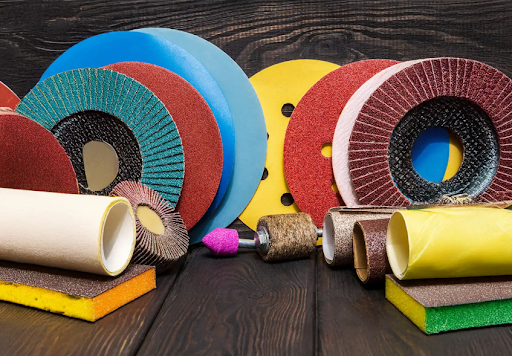
A workshop foreman once said the worst calls he ever got started with “the finish looks fine until you run your hand over it.” That line explains more about choosing industrial abrasive products than any catalogue description ever quite manages. Nobody thinks about grit or bonding agents until a batch of finished parts comes back rejected for reasons nobody can immediately explain. The strange part is how invisible a good abrasive choice actually is, right up until a wrong one makes itself obvious. Operators who’ve lived through a bad batch talk about sourcing very differently afterwards.
A metal fabrication shop kept getting parts returned for surface scratches, despite using the same wheel they’d trusted for years. Nobody suspected the abrasive itself until someone finally compared the current batch against an older, unopened box in storage. The grit distribution had shifted slightly, coarser in places than the label suggested it should be. That inconsistency, invisible to the eye, was leaving faint scratch patterns nobody could trace back through normal inspection. Once identified, switching to a supplier who tested batches more rigorously solved the problem within a single week. The shop still keeps a sample from that old batch, apparently, as a reminder of how subtle these failures can be. Sometimes the fault isn’t technique at all, it’s sitting quietly inside the material everyone assumed was reliable.
The Wheel That Wore Unevenly and Nobody Noticed
An operator kept adjusting his pressure throughout each shift, assuming his own technique was simply inconsistent that particular week. It wasn’t him. The wheel was wearing unevenly, forcing constant micro-adjustments he’d stopped consciously noticing after months of habit. A colleague eventually spotted it, comparing wear patterns across identical jobs run by different operators using the same batch. Switching to a more consistent product removed that constant compensation entirely, and his accuracy improved almost immediately afterwards. He mentioned feeling less exhausted by the end of shifts too, something he hadn’t connected to the wheel beforehand. Uneven wear doesn’t announce itself loudly, it just quietly tires people out until someone finally notices the pattern.
The Aluminium Job That Went Sideways
A workshop used their usual all-purpose abrasive on an aluminium job, assuming it would behave similarly to the steel they normally processed. It didn’t. The surface came out patchy, with a texture nobody could sand away without damaging the material further underneath. A supplier eventually asked the question nobody had thought to ask themselves beforehand, what material, specifically, was this actually for. Aluminium, it turned out, needed something entirely different, a product designed around its particular softness and heat sensitivity properly. That single question, asked properly the first time, would have saved an entire day of wasted material and frustrated troubleshooting. The workshop now flags material type explicitly on every order, a small habit built entirely from that one expensive mistake.
The Rejected Batch That Traced Back Weeks Later
A components manufacturer received a wave of complaints about surface finish, and nobody connected it to abrasives for nearly a month. Every other variable got checked first, machine calibration, operator technique, even the raw material supplier before anyone considered abrasives. Eventually, someone found a pattern, all the affected parts had used stock from one particular delivery batch. That delivery, it turned out, had a slightly different bonding agent nobody had been told about beforehand. The company now requests batch documentation with every delivery, something they’d never bothered asking for previously. It’s a small administrative habit, though it’s already caught two potential issues before they reached production this year.
The Supplier Who Actually Asked Questions
A smaller workshop switched suppliers after growing frustrated with unpredictable results across seemingly identical orders placed repeatedly over several months. The new supplier’s first call involved more questions than the previous relationship had asked across several years combined. What hardness, what finish requirement, what speed would the equipment actually run during this particular job. Those questions felt excessive initially, though the resulting product performed exactly as expected on the very first attempt. The workshop owner now describes that phone call as the moment sourcing stopped feeling like guesswork and started feeling deliberate.
Conclusion
Abrasive products stay invisible right up until something fails, and then the whole job stops to figure out exactly why. Choosing proper industrial abrasive products means fewer scratch patterns, fewer uneven wheels, and fewer batches quietly causing problems nobody expected. Workshops that’ve learned this the hard way now ask more questions upfront, rather than discovering issues after production. It’s rarely about finding the cheapest option, more about finding a supplier who actually understands the specific job. That difference, small as it sounds, is usually what separates a supplier from a genuinely dependable one.